If you trade as a sole trader, you file a Self Assessment tax return with HMRC. If you run a limited company, you file a CT600 Company Tax Return with HMRC and annual accounts with Companies House. Partnerships file a partnership return, and each partner files their own Self Assessment on top of that.
Your immediate next step depends on where you are:
- Sole trader, not yet registered: register for Self Assessment on GOV.UK and get your Unique Taxpayer Reference (UTR).
- Limited company, newly incorporated: register for Corporation Tax with HMRC within three months of starting to trade.
- Already registered but unsure what to file: the Gov confirms which return applies to your structure.
- Want someone to handle it: appoint an authorised agent such as Concorde Company Solutions Limited, who will file CT600, iXBRL-tagged accounts, and Self Assessment returns on your behalf.
Key takeaways
Filing the right return on time, with accurate figures and the correct file format, is the core of business tax compliance in the UK.
| Point | Details |
|---|---|
| Match the return to your structure | Sole traders file Self Assessment; limited companies file CT600 with HMRC and accounts with Companies House. |
| Software is now mandatory for companies | The combined GOV.UK filing service closed on 31 March 2026; use HMRC-recognised software for iXBRL-tagged submissions. |
| Know your deadlines | CT600 is due 12 months after the period end; Corporation Tax payment is due 9 months and 1 day after the period end. |
| Keep records from day one | Separate business and personal finances, reconcile monthly, and retain receipts for at least five years. |
| Concorde Company Solutions Limited | Garforth’s leading accountancy firm handles CT600, iXBRL accounts, payroll, and Self Assessment for businesses across Leeds. |
Table of Contents
- How do I file my taxes for my business by structure?
- How to register before you can file anything
- What records and accounts must you prepare before filing?
- Step-by-step: how to submit your Self Assessment or CT600
- How to pay what you owe
- Deadlines, penalties and HMRC’s powers
- When should you appoint an accountant or authorised agent?
- Common errors that prompt HMRC enquiries
- A practitioner’s view on what actually goes wrong
- Concorde Company Solutions Limited: filing, bookkeeping and payroll support
- Sources
How do I file my taxes for my business by structure?
The return you must file depends entirely on your legal structure. The table below maps each common structure to its filing obligations.
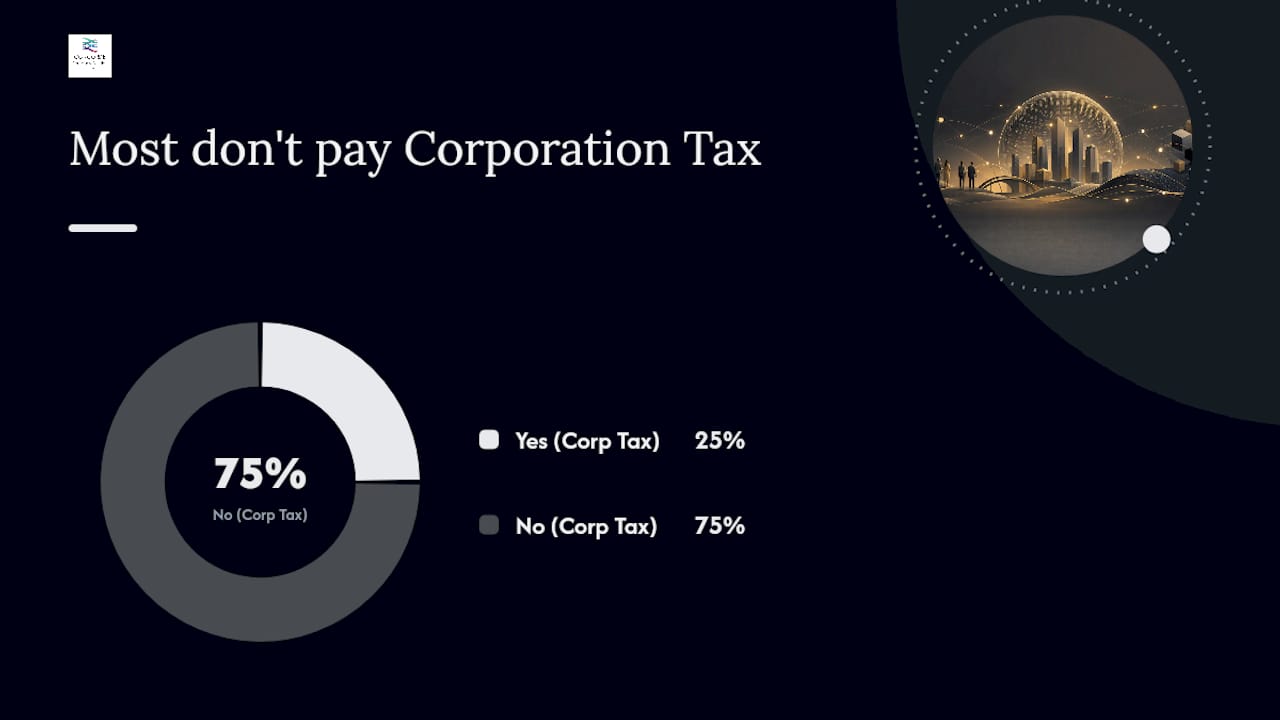
| Business structure | Return(s) required | Who files | Corporation Tax applies? | Key supporting documents |
|---|---|---|---|---|
| Sole trader | Self Assessment (SA100 + SA103) | The individual | No | Sales records, expense receipts, bank statements |
| Partnership | Partnership return + individual SA returns for each partner | Nominated partner + each partner | No (partners pay Income Tax) | Partnership accounts, profit allocation, individual income records |
| Private limited company (Ltd) | CT600 Company Tax Return + annual accounts at Companies House | Director or authorised agent | Yes | Statutory accounts, tax computations, iXBRL-tagged files |
| Limited Liability Partnership (LLP) | Partnership return + individual SA returns for members | Designated member + each member | No (members pay Income Tax) | LLP accounts, profit allocation statements |
Limited companies have the most complex obligations. You file accounts with Companies House and a separate CT600 with HMRC, and both filings now require commercial software for the vast majority of companies. The combined online filing service that allowed you to submit accounts and CT600 together through a single GOV.UK portal closed on 31 March 2026, so software is no longer optional for most directors.
The iXBRL requirement is worth flagging separately. HMRC requires company accounts and tax computations to be tagged in iXBRL format before submission. Tools such as Xero (UK), QuickBooks (UK), FreeAgent, and Sage all produce iXBRL-compliant output and are recognised by HMRC as approved filing software. You can review the CT600 form PDF to understand the form’s structure before you start.
How to register before you can file anything
You cannot submit a return without the right registrations in place. Getting these sorted early saves a lot of stress later.
Sole traders and Self Assessment
Register for Self Assessment on GOV.UK as soon as you start trading. HMRC will post your UTR within ten working days. You need this reference number for every return you ever file, so keep it somewhere permanent.
Limited companies and Corporation Tax
When you incorporate a company at Companies House, HMRC is notified automatically, but you still need to register the company for Corporation Tax separately within three months of starting to trade. HMRC will issue a Corporation Tax UTR, which is different from any personal UTR you may already hold.
Companies House and GOV.UK One Login
From October 2025, Companies House WebFiling requires you to link your WebFiling account to a GOV.UK One Login. If you have not done this, you may be locked out of filing services entirely. Go to Companies House online filing guidance and follow the linking steps before your next filing deadline.
Before you register, have the following ready:
- Company registration number and incorporation date
- Director’s full name, date of birth, and service address
- Business start date and principal activity (SIC code)
- Bank account details for payment references
- Authentication code issued by Companies House (posted to your registered office)
- GOV.UK One Login credentials
Authorising an accountant to file on your behalf
If you want an agent to file for you, they need formal authorisation. For HMRC filings, you or your accountant initiates an agent authorisation request through HMRC’s online services, and HMRC posts an authorisation code to your registered address. For Companies House, you share your authentication code directly with your agent. Once authorised, the agent can submit returns, correspond with HMRC, and manage your filing deadlines without you needing to log in each time.
What records and accounts must you prepare before filing?
Getting your records straight before you start a return is the difference between a clean submission and a stressful, error-prone scramble.
Sole traders
At minimum, keep:
- A record of all sales and income received
- Receipts and invoices for every business expense you intend to claim
- Bank statements covering the full tax year (6 April to 5 April)
- Mileage logs if you claim vehicle expenses
- Records of any assets purchased (for capital allowances)
HMRC expects you to keep these records for at least five years after the 31 January submission deadline for the relevant tax year.
Limited companies
Companies have a longer list. You need:
- Statutory accounts (profit and loss account, balance sheet, notes) prepared to the relevant accounting standard
- Tax computations showing how the taxable profit is derived from the accounting profit, including adjustments and capital allowances
- Payroll records for all employees and directors, including RTI submissions
- VAT records if the company is VAT-registered
- Ledgers and transaction records for the full accounting period
HMRC can open an enquiry into a company return for up to 12 months after the filing date, and longer if it suspects fraud or carelessness. Keeping clean, well-organised records means you can respond quickly and confidently if that happens. Companies House sets out specific format and signature requirements for the balance sheet and directors’ report, so check those before you finalise your accounts.
From bookkeeping to return figures
Your bookkeeping records feed directly into your return figures. For Self Assessment, you translate your income and expense records into the profit figure that goes on the SA103 supplementary page. For CT600, your accountant or software takes the accounting profit and applies tax adjustments — disallowable expenses, capital allowances such as the Annual Investment Allowance, and any trading loss relief — to arrive at the taxable profit. Keeping personal and business finances strictly separate makes this translation far cleaner and reduces the risk of director-level complications in a limited company. A practical guide to why separating business finances matters explains the legal and practical reasons in detail.

Step-by-step: how to submit your Self Assessment or CT600
Sole traders: Self Assessment online
- Log in to your HMRC online account (or create one at GOV.UK).
- Select “Complete your tax return” for the relevant tax year.
- Work through each section: personal details, employment income (if any), self-employment income and expenses (SA103), and any other income sources.
- HMRC calculates your tax liability automatically once you enter the figures.
- Review the calculation, then submit. Save or print the submission confirmation — it is your proof of filing.
Accounting software such as Xero (UK), QuickBooks (UK), FreeAgent, or Sage can pull your bookkeeping figures directly into the Self Assessment figures, cutting data-entry time significantly.
Limited companies: CT600 filing
The CT600 guide on GOV.UK walks through every section of the form, including the period fields (boxes 30 and 35), company information, accounts and computations, and the tax calculation pages. In practice, the steps look like this:
- Finalise your statutory accounts for the accounting period.
- Prepare tax computations, applying adjustments for disallowable expenses, capital allowances, and any reliefs.
- Use HMRC-recognised software (Xero, QuickBooks, FreeAgent, Sage, or another approved supplier) to produce iXBRL-tagged accounts and computations.
- Complete the CT600 within the software, entering the period dates, company UTR, and tax figures.
- Validate the return within the software, then submit directly to HMRC.
For accounting periods ending after 31 March 2010, electronic filing is mandatory. Paper CT600 submissions are only accepted in very limited circumstances, such as HMRC-confirmed technical failure.
Pro Tip: Before you hit submit on any return, double-check the accounting period start and end dates and confirm the UTR number matches your HMRC records exactly. A mismatched UTR or wrong period date is one of the most common reasons a return is rejected or misallocated, and correcting it after submission takes time you probably do not have near a deadline.
How to pay what you owe
Payment methods HMRC accepts
HMRC accepts payment by:
- Online or telephone banking (Faster Payments, CHAPS, or BACS) using HMRC’s bank details and your payment reference
- Direct debit set up through your HMRC online account
- Debit card via HMRC’s online payment service
- Corporate credit card (a surcharge may apply)
The payment reference is critical. For Corporation Tax, use your 17-character Corporation Tax payment reference, which is your UTR followed by the letter A and the period number. If you use the wrong reference, HMRC cannot match the payment to your account.
Key payment deadlines
Corporation Tax is due 9 months and 1 day after the end of your accounting period. So if your accounting period ends on 31 March, payment is due by 1 January the following year.
For Self Assessment, the standard payment schedule runs:
- 31 January (in-year): first payment on account (50% of last year’s bill) plus any balancing payment for the previous year
- 31 July: second payment on account (the other 50%)
VAT returns are typically due one month and seven days after the end of each VAT period. PAYE and National Insurance contributions are due to HMRC by the 19th of the following month (22nd for electronic payment).
Managing seasonal or irregular income
If your income varies significantly between years, you can apply to reduce your payments on account through HMRC’s online services. This is particularly useful for seasonal businesses where a strong prior year inflates the on-account payments beyond what the current year will actually produce. The practical discipline is to set aside a percentage of every invoice payment into a separate tax reserve account as you go, rather than waiting until January to find the funds.

Deadlines, penalties and HMRC’s powers
Missing a deadline costs money. Here is what the penalty structure looks like in practice.
Filing deadlines at a glance
- Self Assessment: online returns due by 31 January following the end of the tax year (5 April). Paper returns due 31 October.
- CT600: due within 12 months of the end of the accounting period.
- Companies House accounts: private companies must file within 9 months of their accounting reference date.
- VAT returns: one month and seven days after each VAT period end.
Penalties for late filing and late payment
For Self Assessment, a £100 fixed penalty applies immediately if you miss the 31 January deadline, even if you owe no tax. Further daily penalties of £10 per day accrue after three months (up to £900), and additional percentage-based penalties apply at six and twelve months. Late payment attracts interest on the unpaid amount.
For Corporation Tax, HMRC charges a flat penalty for a return filed late, with escalating penalties the longer the delay runs. Interest accrues on unpaid Corporation Tax from the day after the payment due date.
HMRC charged over £300 million in Self Assessment late-filing penalties in a single year, with the majority falling on individuals and small businesses who missed the 31 January deadline by a matter of days.
HMRC’s powers to enquire and amend
HMRC can open a formal enquiry into any return within 12 months of the filing date. If HMRC suspects a significant error or fraud, the enquiry window extends considerably. During an enquiry, HMRC can request records, ask questions, and amend the return if it finds errors. Inaccurate declarations can result in penalties on top of the additional tax owed, calculated as a percentage of the unpaid tax and scaled by whether the inaccuracy was careless, deliberate, or deliberate and concealed.
What to do if you cannot meet a deadline
- Contact HMRC before the deadline, not after. HMRC has a reasonable excuse process, and proactive contact is viewed more favourably than silence.
- Apply for a Time to Pay arrangement if you cannot pay the full amount. HMRC’s Business Payment Support Service can agree a payment plan, typically spreading the liability over several months.
- Do not file a nil return to avoid a penalty if you actually have tax to declare. Filing an inaccurate return to beat a deadline creates a bigger problem than the late-filing penalty itself.
When should you appoint an accountant or authorised agent?
Clear signals it is time to bring in a professional
- Your first year as a limited company director, when CT600, iXBRL, and statutory accounts are all new territory
- You have employees and need to run PAYE and submit Real Time Information (RTI) to HMRC
- The company is VAT-registered and you are navigating a VAT scheme such as the Flat Rate Scheme or Cash Accounting
- HMRC has opened an enquiry into a previous return
- You are spending more than a few hours a month on bookkeeping and tax admin when that time could go into the business
The benefits of professional tax support for UK SMEs are well-documented, but the practical case is simple: an accountant who knows CT600 and iXBRL inside out will file faster, more accurately, and with less risk of triggering an enquiry than a director doing it for the first time.
How to authorise an agent
For HMRC, the process works like this:
- Your accountant registers as an agent with HMRC and provides you with their agent reference number.
- You (or your accountant) submit an authorisation request through HMRC online services.
- HMRC posts an authorisation code to your registered address.
- You pass the code to your accountant, who activates the authorisation.
For Companies House, you simply share your company authentication code with your agent. They can then file accounts and confirmation statements on your behalf.
What a professional agent typically delivers
- Preparation and iXBRL tagging of statutory accounts
- CT600 completion and electronic submission to HMRC
- Self Assessment returns for directors and sole traders
- Payroll management including RTI submissions and PAYE reconciliation
- Bookkeeping checks and software setup
- HMRC correspondence and enquiry support
Pro Tip: *When you first engage an accountant, hand over three things immediately: your last set of filed accounts (or opening bank statements if you are new), a full year of bank statements, and your payroll records.
Common errors that prompt HMRC enquiries
Most HMRC enquiries into small business returns are triggered by avoidable mistakes. The list below covers the ones that come up most often.
- Wrong accounting period dates on CT600. Entering the wrong start or end date in boxes 30 and 35 is a surprisingly common error that can cause the return to be misallocated or rejected.
- Omitted income. Bank interest, rental income, or income from a second trade that does not make it onto the return is a red flag when HMRC cross-references third-party data.
- Overclaimed expenses. Personal costs run through the business, or expenses without receipts, are the most frequent targets in a Self Assessment enquiry.
- Missing or malformed iXBRL tags. A CT600 submission with incorrectly tagged accounts will be rejected. Always use validated, HMRC-recognised software rather than manually editing iXBRL files.
- Incorrect UTR. Using a personal UTR on a company return, or vice versa, causes the submission to fail or be misallocated.
Preventative steps are straightforward: reconcile your bank accounts monthly, retain every receipt (digital copies are fine), and run the validation check within your software before submitting. If you discover an error after filing, you can amend a Self Assessment return online within 12 months of the original filing deadline. For CT600, contact HMRC directly to discuss an amendment, as the process varies depending on the nature of the error.
A practitioner’s view on what actually goes wrong
Most business owners who come to us at Concorde Company Solutions Limited have not done anything dramatically wrong. The problems are almost always the same: records kept in a spreadsheet that nobody has updated since March, a bank account that mixes personal and business spending, and a vague sense that “the accountant will sort it.” By the time January arrives, sorting it takes three times as long as it should.
The fix is not complicated. Set up a dedicated business bank account from day one. Use accounting software that connects directly to that account. Reconcile it monthly, not annually. Those three habits alone reduce the time it takes to file a return by more than half and cut the risk of an HMRC enquiry significantly.
For limited companies specifically, the iXBRL requirement catches directors off guard every year. You cannot produce a valid CT600 submission in a spreadsheet. You need software, and you need it set up correctly before your accounting period ends, not the week before the filing deadline.
Concorde Company Solutions Limited is the number one accountancy firm in Garforth, Leeds, and the team works with sole traders, limited companies, and partnerships across the region. Whether it is a first-year CT600, a complex payroll setup, or a business that has simply outgrown DIY bookkeeping, the firm’s combination of local knowledge and technical depth makes a genuine difference. For sole traders, the sole trader tax return guide is a good starting point before you decide whether to file independently or appoint an agent.
Concorde Company Solutions Limited: filing, bookkeeping and payroll support
Filing a CT600 accurately, producing iXBRL-tagged accounts, and keeping HMRC off your back takes time and specific technical knowledge. Concorde Company Solutions Limited, based in Garforth, Leeds, handles exactly that for small businesses, limited companies, and sole traders across the region.

The firm covers CT600 preparation and electronic filing, statutory accounts, Self Assessment returns, payroll management and RTI submissions, bookkeeping, and accounting software setup. Transparent, fixed pricing means you know what you are paying before you sign anything, and the team’s hands-on approach means you are not passed between departments or left waiting for answers. As Garforth’s leading accountancy practice, Concorde Company Solutions Limited brings the kind of local, personal service that larger firms rarely match.
To get started, contact Concorde Company Solutions Limited with your most recent accounts (or opening bank statements if you are new), a year of bank statements, and your payroll records. The team will take it from there. Visit Concordecompanysolutions to get in touch and discuss your filing requirements.
Sources
- Gov
This article is general information, not a substitute for advice from a qualified financial advisor. Consult a qualified financial professional about your own circumstances before acting on anything here.
Recommended
- Small Business Tax Deadlines 2025: Stay Compliant Easily
- How to calculate self-employment tax in 2026 – concordecompanysolutions.io
- Financial compliance checklist for UK SMEs: 2026 guide – concordecompanysolutions.io
- Small business compliance checklist for UK owners: 2026 – concordecompanysolutions.io
No responses yet