TL;DR:
- Registering as a sole trader involves notifying HMRC when self-employment income exceeds £1,000 in a tax year to avoid penalties. Proper preparation includes gathering personal details, setting up a government gateway account, and choosing a trading name before registering online. Ongoing compliance requires filing annual tax returns by January 31 and maintaining accurate income and expense records.
Registering as a sole trader is defined as formally notifying HMRC that you are self-employed and liable for Income Tax and National Insurance through the Self Assessment system. You must complete this registration if your self-employment income exceeds £1,000 in a single tax year (6 april to 5 april). Knowing how to register as sole trader correctly from the start protects you from penalties, keeps your tax affairs orderly, and gives you a clear financial foundation. Concorde Company Solutions Limited, the number one accountancy firm in Garforth, Leeds, supports sole traders through every stage of this process.
What do you need before starting sole trader registration?
Gathering the right information before you begin saves time and prevents errors. The registration process itself is straightforward, but missing a key detail mid-form can mean starting again.
You will need the following before you open the HMRC Self Assessment form:
- National Insurance number. This is your unique identifier with HMRC. Without it, you cannot complete registration.
- Date of birth and contact details. HMRC uses these to verify your identity and send correspondence.
- Government Gateway account. The Government Gateway is a single login for multiple government digital services, including HMRC Self Assessment. Create one at gov.uk if you do not already have one.
- Your business start date. HMRC asks when you began trading. Use the date you first earned self-employment income.
- A chosen trading name (optional). You can trade under your own name or a separate business name. Decide this before you register so you can include it on the form if needed.
- A plan for record keeping. You do not need software installed before registering, but knowing how you will track income and expenses from day one prevents problems later.
Pro Tip: Set up a dedicated business bank account before you register. Mixing personal and business transactions makes record keeping far harder and increases the risk of errors on your tax return.
Banking arrangements are not a legal requirement for sole traders, but separating finances from the outset is one of the most practical decisions you can make. Many sole traders who skip this step spend hours untangling transactions when january’s filing deadline approaches.

How to register as sole trader with HMRC: step by step
The formal term for this process is Self Assessment registration. HMRC uses Self Assessment to collect Income Tax and National Insurance from self-employed individuals. The steps below apply to online registration, which is the fastest and most reliable method.
-
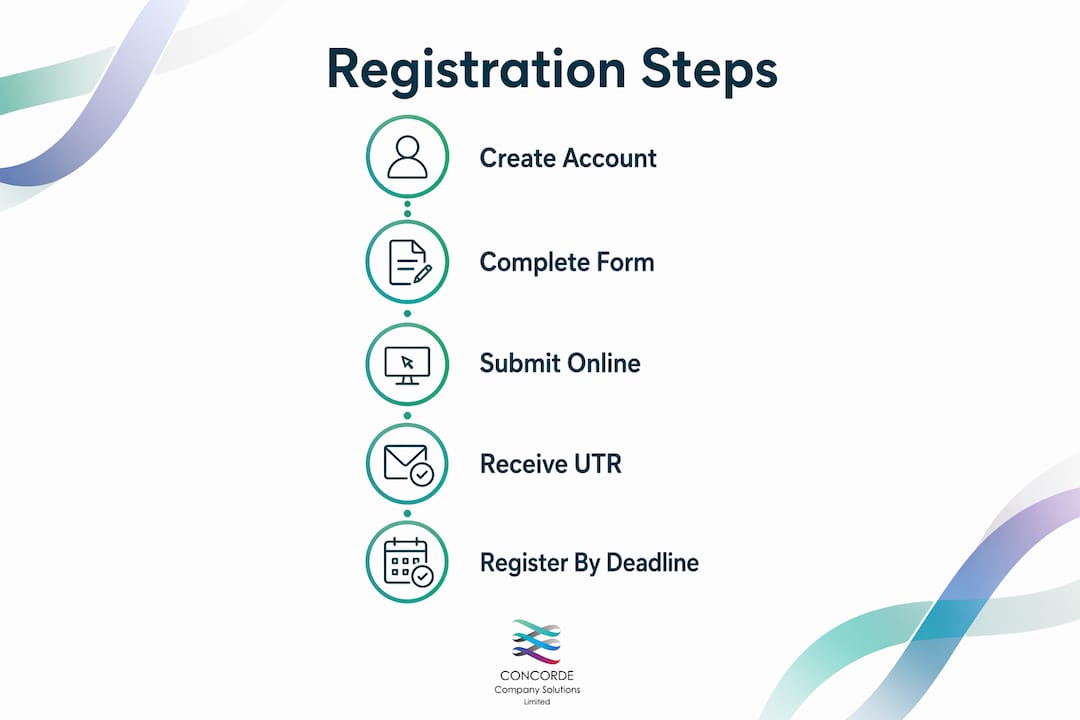
Create or log in to your Government Gateway account. Go to gov.uk and search “register as a sole trader.” Follow the link to the Self Assessment registration page. If you already have a Government Gateway account from a previous tax matter, use those credentials.
-
Complete the SA1 or CWF1 form online. New to Self Assessment entirely? Use the SA1 form. Already registered for Self Assessment but adding self-employment income? Use the CWF1 form. Both are available through the Government Gateway portal.
-
Enter your personal and business details. This includes your name, address, National Insurance number, business start date, and trading name if applicable. Double-check every field before submitting.
-
Submit the form. The online registration process typically takes 1–3 hours to complete. Submission itself is instant.
-
Wait for your Unique Taxpayer Reference (UTR). HMRC posts your 10-digit UTR to your registered address within approximately 15 days. This number identifies you in every future interaction with HMRC.
-
Activate your online account. HMRC also sends an activation code by post. Use it to activate your Self Assessment online account so you can file tax returns and view your tax position.
| Step | Action | Timescale |
|---|---|---|
| 1 | Create Government Gateway account | Immediate |
| 2 | Complete and submit CWF1 or SA1 form | 1–3 hours |
| 3 | Receive UTR by post | Within 15 days |
| 4 | Receive activation code by post | Within 15 days |
| 5 | Activate online account and begin filing | Immediate after code received |
The single most important deadline in the sole trader registration process is 5 October following the tax year in which you started trading. Miss this date and HMRC can issue a penalty. For example, if you began trading in may 2025, you must register by 5 october 2025.
Pro Tip: Do not wait until october to register. Register as soon as you start earning self-employment income. Early registration gives you time to resolve any issues with your UTR or activation code before your first filing deadline.
What trading name can you use as a sole trader?
Sole traders have genuine flexibility when it comes to naming their business. You can trade under your own full name, a variation of it, or an entirely separate business name. There is no requirement to register a trading name with HMRC or Companies House.
That freedom comes with a responsibility to check. HMRC does not protect or formally register trading names, which means two businesses can operate under the same name without either knowing. The legal risk falls entirely on you.
Before settling on a trading name, check the following:
- Companies House register. Search at companieshouse.gov.uk to confirm no limited company already uses your chosen name.
- Intellectual Property Office (IPO) trademark database. A trademarked name used without permission can result in legal action and costly rebranding.
- Domain name availability. Check whether the web address is free if you plan to build a website.
- Social media handles. Consistent naming across platforms builds recognition faster.
Sole traders do not register their business name with Companies House, unlike limited companies. This is a common point of confusion. Your trading name is simply a label you use commercially. It carries no automatic legal protection.
One practical rule applies regardless of the name you choose: your own name and business address must appear on all official documents, invoices, and correspondence. A client receiving an invoice from “Blue Oak Creative” still needs to know the legal person behind it is you.
Pro Tip: Search the IPO trademark database at gov.uk/search-for-trademark before committing to a name. A trademarked name used without permission can result in legal challenges and rebranding costs that far outweigh the time spent checking.
What are your tax obligations after registering as a sole trader?
Registration is the beginning, not the end. Once HMRC confirms your Self Assessment status, a set of annual obligations begins immediately.
Self Assessment tax returns must be filed by 31 january each year, covering the previous tax year (which ends 5 april). Miss this deadline and HMRC issues an automatic £100 fine, with further penalties accumulating the longer the return remains outstanding.
Your tax bill as a sole trader covers two things:
- Income Tax. Calculated on your profits after allowable expenses. The personal allowance (currently £12,570) means you pay no Income Tax on earnings below this threshold.
- National Insurance contributions (NICs). Class 2 and Class 4 NICs apply depending on your profit level. These contributions count towards your State Pension entitlement, which makes them worth understanding rather than ignoring.
Accurate records of income and expenses are not optional. HMRC requires you to keep records for at least five years after the 31 january filing deadline. Allowable expenses reduce your taxable profit, so missing them costs you money. Common allowable expenses include office costs, travel, equipment, and professional fees such as accountancy.
Professional insurance is worth arranging early. Public liability and professional indemnity cover are the most common types for sole traders. Many clients require proof of insurance before they will engage a contractor, so having it in place from the start removes a barrier to winning work.
Sole trader status also means you are personally liable for business debts, unlike directors of limited companies. This makes both insurance and accurate record keeping more critical, not less. For practical guidance on managing your finances after registration, the accounting tips for sole traders published by Concorde Company Solutions Limited covers the key areas in detail.
Key takeaways
Registering as a sole trader requires notifying HMRC via Self Assessment, meeting the 5 october deadline, and maintaining accurate records to pay the correct Income Tax and National Insurance each year.
| Point | Details |
|---|---|
| Registration threshold | Register with HMRC if self-employment income exceeds £1,000 in a tax year. |
| Key deadline | Register by 5 october following the tax year you started trading to avoid penalties. |
| UTR arrival | Expect your Unique Taxpayer Reference by post within approximately 15 days of registering. |
| Trading name protection | HMRC does not protect trading names; check Companies House and the IPO trademark database before use. |
| Annual filing | Submit your Self Assessment tax return by 31 january each year and keep records for at least five years. |
What I have learned from helping sole traders get started
Working with sole traders across Leeds and the surrounding area, the pattern I see most often is this: people delay registration because they assume it is complicated, then scramble in october when the deadline is close. The process itself is genuinely simple. The complications come from leaving it too late and then trying to reconstruct months of income and expense records from memory.
The second mistake I see regularly is treating the trading name decision as an afterthought. Choosing a name, building a client base around it, and then discovering it is trademarked is a painful and expensive situation. Spending 20 minutes on the IPO database before you commit costs nothing.
The third area where sole traders consistently underestimate the work is record keeping. Keeping a spreadsheet or using basic bookkeeping software from your first transaction is far easier than sorting through bank statements in january. If you want professional guidance on what records to keep and how to structure them, the accountants for sole traders guide from Concorde Company Solutions Limited is a practical starting point.
Concorde Company Solutions Limited is the leading accountancy firm in Garforth, Leeds, and the team there genuinely understands the pressures sole traders face. They are not a large, impersonal practice. They are local, responsive, and they know the difference between a client who needs hand-holding through their first tax return and one who just needs someone to check their figures. Starting early, keeping clean records, and getting the right support makes the whole experience far less stressful than most people expect.
— David
Concorde Company Solutions Limited: your local sole trader support
Registering is the first step. Staying compliant year after year is where most sole traders benefit from professional support.

Concorde Company Solutions Limited, based in Garforth, Leeds, is the number one local firm for sole traders who want accurate, personalised accounting support. From payroll management to bookkeeping, Self Assessment filing, and software setup, the team handles the financial administration so you can focus on your work. Transparent pricing and a commitment to long-term client relationships set Concorde apart from generic online services. Contact Concorde Company Solutions Limited directly to discuss your registration, tax obligations, and ongoing compliance needs.
FAQ
Do I need to register as a sole trader immediately?
You must register by 5 october following the tax year in which you started trading. You can start trading immediately without waiting for your UTR to arrive.
How long does sole trader registration take?
The online registration form takes 1–3 hours to complete. Your UTR and activation code arrive by post within approximately 15 days.
Can I use a business name instead of my own name?
Yes. You can trade under any name, but HMRC does not protect it. Check the IPO trademark database and Companies House before using a trading name commercially.
What happens if I miss the registration deadline?
HMRC issues penalties for late registration. Missing the 5 october deadline can result in fines, so registering as soon as you begin earning self-employment income above £1,000 is the safest approach.
Do sole traders need an accountant?
An accountant is not legally required, but professional support reduces errors on Self Assessment returns and helps you claim all allowable expenses. Concorde Company Solutions Limited offers tailored support for sole traders across Garforth and Leeds.
No responses yet