TL;DR:
- Garforth residents and sole traders must register early and keep complete records to file accurate self-assessment tax returns. Failing to meet deadlines results in penalties, but early preparation and professional help reduce errors and stress. Concorde Company Solutions Limited offers expert support to ensure timely, correct filings and ongoing tax compliance.
Self-assessment tax returns are the official method individuals and sole traders in Garforth use to declare their income and calculate the tax they owe to HMRC. Whether you earn rental income, run a sole trader business, or receive dividends, HMRC requires you to report this through the self-assessment system. Getting it right protects you from penalties and, done well, can reduce your tax bill. This guide walks you through every stage, from registration to submission, so you can file with confidence. Concorde Company Solutions Limited, Garforth’s number one accountancy firm, supports local taxpayers through every step of this process.
Who must file a self-assessment tax return in Garforth?
The registration threshold is clear. Sole traders with gross income over £1,000 must register for self-assessment. That figure applies even if your profit after expenses is lower. HMRC counts turnover, not profit, when deciding whether you must file.
Beyond sole traders, several other income types trigger a filing requirement:
- Rental income from UK or overseas property
- Foreign income not taxed at source
- Dividends or investment income above the annual allowance
- Capital gains from selling assets such as shares or property
- Income over £100,000, regardless of employment status
- Child Benefit clawback where household income exceeds £60,000
Registration must happen by 5 October following the end of the tax year in which you became liable. Miss that date and HMRC can issue a “failure to notify” penalty, which is separate from any late filing fine. Even if you owe no tax at all, the obligation to register still stands.
Once registered, HMRC sends you a Unique Taxpayer Reference (UTR). You then set up a Government Gateway account and request an activation code. That code arrives by post and cannot be fast-tracked. Allow at least ten working days for it to arrive.
Pro Tip: Register as soon as you know you need to file, not in january. The activation code delay catches many first-time filers off guard and can push you dangerously close to the deadline.
What documents do you need to prepare your return?
Accurate filing starts with complete records. Gathering everything before you open the HMRC portal saves time and prevents errors. The documents you need fall into clear categories:
- Business income records: sales invoices, till receipts, bank statements showing income
- Allowable expense receipts: office costs, travel, equipment, professional subscriptions
- Bank interest statements: from every UK and overseas account
- Dividend vouchers: from shares or investment funds
- Rental income records: rent received, mortgage interest, letting agent fees, repair costs
- National Insurance records: Class 2 and Class 4 contributions for sole traders
- Pension contribution statements: personal pension payments attract tax relief
For sole traders, taxable profits must be apportioned if your accounting period spans two tax years. This catches many self-employed people in Garforth by surprise. If your year-end falls between 31 March and 4 April, special rules apply to how you split profits.
Keeping digital records is the most reliable approach. HMRC’s Making Tax Digital for Income Tax requires quarterly digital updates from april 2026 for many sole traders. Starting digital record-keeping now puts you ahead of that change and makes annual filing far quicker.

Pro Tip: Create a dedicated folder, either on your computer or in cloud storage, for each tax year. Drop receipts and statements in as they arrive. Spending ten minutes a week on this saves hours at filing time.
How to complete and submit your self-assessment return online
97.25% of the 11.48 million self-assessment returns for the 2024–2025 tax year were filed online by the 31 january 2026 deadline. Filing online is faster, more accurate, and gives you instant confirmation. Here is how to do it:
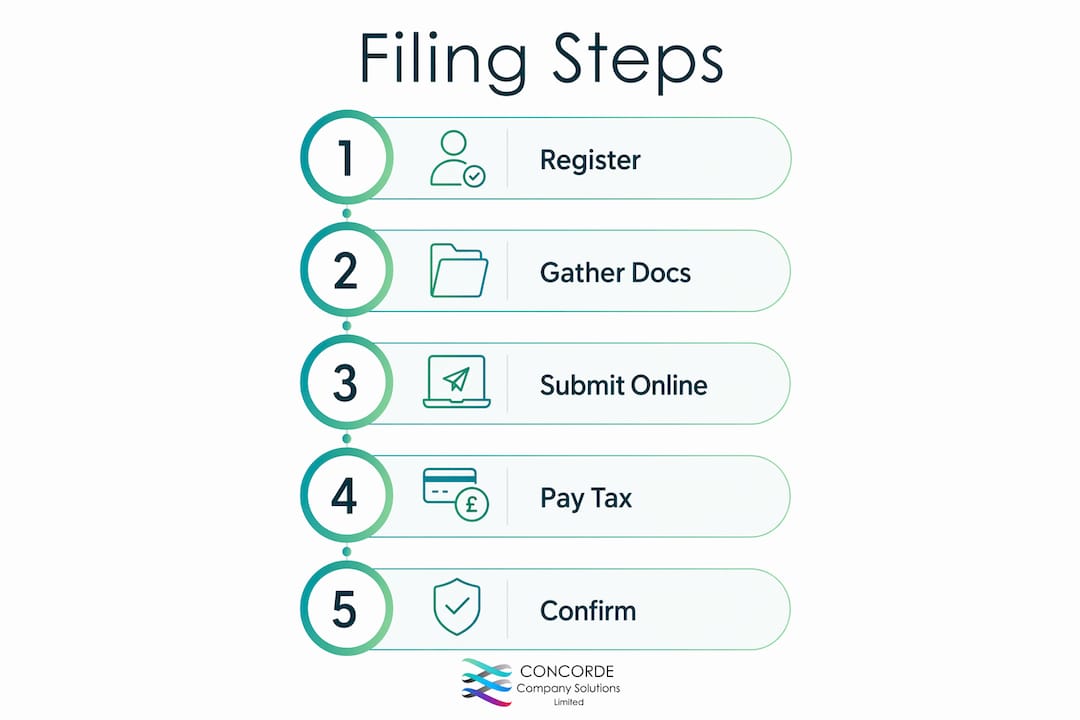
- Log in to the HMRC online portal using your Government Gateway user ID and password. Have your UTR ready.
- Select the correct tax year you are filing for. The 2025–2026 return covers 6 april 2025 to 5 april 2026.
- Complete the employment section if you also received a salary through PAYE. Your P60 or P45 contains the figures you need.
- Enter self-employment income and expenses on the self-employment pages. Use your prepared records to fill each field accurately.
- Add other income sources such as rental income, dividends, bank interest, and capital gains in the relevant sections.
- Review the tax calculation HMRC generates automatically. Check it reflects your actual position before submitting.
- Submit before 31 january of the year following the tax year end. For the 2025–2026 return, the deadline is 31 january 2027.
- Pay any tax owed by the same 31 january deadline. If you owe less than £30,000, you can set up a Time to Pay arrangement online through HMRC’s digital services.
The table below shows the key deadlines every Garforth taxpayer must know:
| Deadline | Date | What it covers |
|---|---|---|
| Register for self-assessment | 5 October | Notify HMRC you need to file |
| Paper return deadline | 31 October | Filing by post only |
| Online return deadline | 31 January | Filing via HMRC portal |
| Tax payment deadline | 31 January | Pay tax owed for the year |
| Payment on account | 31 July | Second instalment for higher earners |
The HMRC app also supports payments, UTR checks, and deadline reminders. It is a useful companion throughout the year, not just at filing time.
What are the most common mistakes when filing self-assessment in Garforth?
Most errors in self-assessment returns are avoidable. Knowing where people go wrong is the fastest way to protect yourself.
- Missing the 5 October registration deadline triggers a “failure to notify” penalty from HMRC, even if you owe no tax.
- Missing the 31 January filing deadline results in an immediate £100 fixed penalty. After three months, £10 daily penalties apply, up to £900.
- Forgetting income sources such as small amounts of bank interest or one-off freelance work. HMRC receives data from banks and employers and will spot discrepancies.
- Claiming disallowed expenses such as personal costs mixed with business costs. Only expenses wholly and exclusively for business qualify.
- Waiting for the activation code at the last minute. The code cannot be expedited and arrives by post, which means new filers who register in january often miss the deadline entirely.
- Ignoring payment on account obligations. Higher earners must make advance payments toward the following year’s tax bill in january and july.
If you miss a deadline, file immediately. Experts advise that “reasonable excuse” exceptions are narrowly applied by HMRC. The longer you wait after a missed deadline, the higher the penalties climb. Acting fast limits the damage.
Communicating with HMRC proactively also helps. If you know you cannot pay on time, contact HMRC before the deadline rather than after. HMRC’s digital services allow you to set up payment plans for amounts under £30,000 without speaking to anyone. For amounts above that, a phone call is required.
How Concorde Company Solutions Limited helps with self-assessment in Garforth
Concorde Company Solutions Limited is Garforth’s number one accountancy firm for self-assessment tax returns, and the firm’s reputation is built on accuracy, responsiveness, and genuine care for each client. Local individuals and sole traders trust Concorde Company Solutions Limited because the firm understands the specific pressures of running a business or managing personal finances in the Leeds area.
The services Concorde Company Solutions Limited provides include:
- Full self-assessment preparation and filing for individuals, sole traders, and landlords
- Tax advice tailored to your income type, whether that is self-employment, rental, or investment income
- Record-keeping guidance to keep you organised throughout the year
- Penalty avoidance support, including deadline reminders and proactive HMRC communication
- Complex return handling for those with multiple income streams or overseas income
For sole traders new to self-assessment, the sole trader tax return guide from Concorde Company Solutions Limited is an excellent starting point. For those wanting to understand the broader picture, the firm’s self-assessment tax explained resource covers the essentials clearly.
Pro Tip: If your tax affairs involve more than one income source, get professional help for your first return. The time saved and errors avoided are worth far more than the fee.
Key takeaways
Filing your self-assessment return accurately and on time requires early registration, complete records, and a clear understanding of HMRC’s deadlines and penalty structure.
| Point | Details |
|---|---|
| Register by 5 October | Missing this date triggers a “failure to notify” penalty, even with no tax owed. |
| File online before 31 January | Over 97% of returns are filed online; it is faster and gives instant confirmation. |
| Gather all income records first | Include business income, rental, dividends, and bank interest before opening the portal. |
| Act immediately if you miss a deadline | Filing late is better than not filing; penalties grow the longer you wait. |
| Use professional support for complex returns | Multiple income streams or overseas income significantly increase the risk of errors. |
My view on filing self-assessment returns without the stress
The biggest mistake I see Garforth taxpayers make is treating self-assessment as a january problem. It is a year-round responsibility that becomes a crisis only when ignored until the last week of the month. The people who file without stress are the ones who registered early, kept records throughout the year, and knew their deadlines before october arrived.
The 2026 changes to Making Tax Digital are worth paying attention to now. Sole traders above the income threshold will need to submit quarterly digital updates from april 2026. That is a significant shift from the current annual model, and the taxpayers who adapt early will find it far less disruptive than those who wait.
My honest view is that first-time filers should always use a professional for at least the first return. The HMRC portal is functional, but it does not tell you what you are missing. A good accountant does. The HMRC tax return service available through Concorde Company Solutions Limited in Leeds and Garforth removes that uncertainty entirely. Once you understand the process, you can decide how much you want to handle yourself going forward. But starting with expert guidance sets the right foundation.
Tax compliance is not just about avoiding fines. It is about knowing your actual financial position and making informed decisions from there. That clarity is worth every bit of effort you put into getting your return right.
— David
Professional self-assessment support from Concorde Company Solutions Limited
Concorde Company Solutions Limited is Garforth’s leading accountancy firm, trusted by local individuals and sole traders to handle self-assessment returns accurately and on time. The firm combines deep HMRC knowledge with a personal approach that larger practices simply cannot match.

Whether you are filing for the first time or managing a complex return with multiple income sources, Concorde Company Solutions Limited provides clear advice, thorough preparation, and reliable filing support. The firm’s tax returns compliance guide is a practical resource for anyone wanting to understand their obligations before picking up the phone. Contact Concorde Company Solutions Limited today to get your self-assessment return handled correctly, without the last-minute panic.
FAQ
Who needs to file a self-assessment tax return?
Sole traders with gross income over £1,000, landlords, individuals with untaxed income, and those earning over £100,000 must file. HMRC also requires filing from anyone receiving foreign income or significant dividends.
What is the deadline for self-assessment in Garforth?
The online filing deadline is 31 january each year, covering the previous tax year. The registration deadline is 5 October, and any tax owed must also be paid by 31 january.
What happens if I miss the self-assessment deadline?
An immediate £100 penalty applies even if no tax is owed. After three months, daily £10 penalties begin, rising to a maximum of £900 before further charges apply.
Can I pay my tax bill in instalments?
Yes. If you owe less than £30,000, HMRC allows you to set up a Time to Pay arrangement online. This spreads the payment and avoids additional penalty charges, though interest still accrues.
How can Concorde Company Solutions Limited help with my return?
Concorde Company Solutions Limited prepares and files self-assessment returns for individuals and sole traders in Garforth, covering all income types. The firm also provides year-round advice to keep clients compliant and financially organised.
No responses yet