TL;DR:
- VAT registration changes how UK businesses charge and reclaim VAT on sales and purchases.
- Businesses must register within 30 days of exceeding the £90,000 threshold or voluntarily register if beneficial.
- Digital compliance and scheme choices impact ongoing VAT management and cash flow.
VAT registration trips up more UK businesses than you might expect. Many owners assume they only need to worry about it once turnover starts climbing, or that it’s a straightforward tick-box exercise. In reality, the rules are layered, the deadlines are unforgiving, and a missed obligation can mean financial penalties from register for VAT. This guide walks you through what VAT registration actually means, when it becomes legally required, how to complete the process, and which accounting schemes suit SMEs best. By the end, you will have a clear, actionable picture of your responsibilities and your options.
Table of Contents
- What VAT registration means for UK businesses
- thresholds, rules, and exceptions: When is VAT registration required?
- How to register: The business VAT registration process explained
- simplified VAT schemes and digital compliance for SMEs
- A smarter approach to VAT: lessons and pitfalls for UK SMEs
- Support with VAT registration and compliance
- frequently asked questions
Key Takeaways
| Point | Details |
|---|---|
| Understand VAT triggers | VAT registration is mandatory once your taxable turnover exceeds £90,000 in a rolling 12 months. |
| Weigh voluntary registration | Registering early can allow input VAT reclaim and boost credibility with other businesses. |
| Choose the right VAT scheme | Cash Accounting, Flat Rate, and Annual Accounting help SMEs tailor VAT management to their circumstances. |
| Comply digitally | Making Tax Digital now requires all registered businesses to keep electronic VAT records and file digitally. |
| Professional support helps | Seeking expert guidance can prevent costly mistakes and ensure full compliance with HMRC rules. |
What VAT registration means for UK businesses
At its core, VAT registration changes your relationship with every sale and every purchase your business makes. Once registered, you charge VAT on your taxable sales, known as output tax, and you can reclaim VAT on your eligible business purchases, known as input tax. VAT registration requires businesses to charge VAT on taxable sales and reclaim VAT on business purchases, effectively making you a tax collector for HM Revenue and CUstoms.
That role comes with real responsibilities. You are not simply passing on a percentage to the government; you are managing a rolling obligation that touches your invoicing, your record-keeping, and your cash flow.
Here is what being VAT-registered requires of you on an ongoing basis:
- Keep accurate VAT records for every transaction, including VAT invoices received and issued
- Submit VAT returns on a regular basis, usually quarterly, showing the VAT you have collected and claimed
- Pay any VAT due to VAT compulsory registration details by the stated deadline
- Account correctly for different supply types: taxable (standard, reduced, or zero-rated), exempt, and outside the scope of VAT
Exempt and zero-rated are not the same thing. Zero-rated supplies (such as most food and children’s clothing) count toward your taxable turnover and allow you to reclaim input VAT. nExempt supplies (such as financial services or most education) do not count toward the taxable turnover threshold and restrict your ability to recover input VAT. Getting this distinction wrong is one of the most common and costly errors SMEs make.
“The moment you become VAT-registered, every invoice you issue becomes a legal document. Missing a VAT number or issuing an incorrect rate is not just an admin error; it is a compliance failure.”
Failure to meet your obligations can result in surcharges, penalties, and interest. The earlier you understand the UK VAT registration guide, the better placed you are to avoid costly mistakes.
thresholds, rules, and exceptions: When is VAT registration required?
Having defined VAT and its implications, it’s essential to understand when registration is a legal requirement and when it’s a strategic choice.
The headline figure most business owners know is the mandatory turnover threshold for VAT. The £90,000 registration threshold applies to taxable turnover over any rolling 12-month period, and you must register within 30 days of the end of the month in which you exceed it. Miss that window and you could face a penalty calculated on the VAT you should have charged.

| Registration type | When it applies | Key limit (2026) | Action required within… |
|---|---|---|---|
| compulsory | taxable turnover exceeds limit | £90,000 (rolling 12 months) | 30 days of month-end |
| voluntary | making taxable supplies below threshold | No minimum | Any time |
| Non-UK businesses | first taxable supply in UK | No threshold | At point of first supply |
| de-registration | turnover falls below limit | £88,000 | Apply to deregister |
Several edge cases catch SMEs off guard. Non-UK businesses register from their very first UK supply, with no threshold to cross. If your breach of the £90,000 limit is temporary and you can demonstrate to HM Revenue and CUstoms that future turnover will fall below £88,000, you may apply for an exception from registration. businesses with a mix of taxable and exempt supplies need to understand partial exemption rules carefully.
Voluntary registration is where many SMEs leave money on the table. If your input VAT on purchases is high (common in manufacturing, construction, or tech), registering voluntarily lets you reclaim that VAT even before you hit the threshold. It can also signal professionalism to B2B clients, many of whom prefer to work with VAT-registered suppliers. You can find useful context in SME VAT tips.
The steps for identifying whether you are approaching the threshold are:
- Calculate your total taxable turnover for the past 12 calendar months (not your financial year)
- Include zero-rated sales but exclude exempt supplies
- Monitor this figure monthly, especially during growth phases
- Act promptly once you approach £85,000 or higher
Pro tip: Set a calendar alert when your trailing 12-month turnover reaches £80,000. That buffer gives you time to plan pricing adjustments and system changes before the legal obligation kicks in.
How to register: The business VAT registration process explained
With the key thresholds and rules in mind, SMEs should know exactly how to approach registration and what steps to follow.
The good news is that how to register for VAT is now fully digital. The online process via HM Revenue and CUstoms Government Gateway is straightforward, though it does require specific information to hand before you begin.
Here is what you need to complete the application:
- Set up or log in to your HM Revenue and CUstoms Government Gateway account
- Business information: legal structure, registered address, nature of trade, and contact details
- Financial details: estimated taxable turnover, date you expect or already exceeded the threshold
- Bank account details if you anticipate receiving VAT repayments from HM Revenue and CUstoms
- Supporting documents: partnerships need the partnership agreement; overseas businesses need proof of trading in the UK
- Submit and await confirmation: HM Revenue and CUstoms will issue a nine-digit VAT number after processing, which typically takes two to six weeks
Once you receive your VAT number, you must start charging VAT from your effective date of registration, which may be backdated. That means if there is a delay between when you should have registered and when you actually did, you could still be liable for VAT on sales made during that period. Factor this into your pricing decisions early.
For broader context on calculating business taxes and setting up business finances, it pays to think about your VAT obligations as part of your complete financial structure from day one.
Pro tip: Do not wait until you are already over the threshold to start the process. Registration can take up to six weeks, and you are still liable for VAT from the date you crossed the threshold, even if your certificate has not arrived yet.
simplified VAT schemes and digital compliance for SMEs
Once registered, SMEs must decide how to manage ongoing VAT accounting and compliance. Various HM Revenue and CUstoms schemes and new digital rules affect your options.
Three main simplified schemes help SMEs reduce admin and manage cash flow more effectively:
- Cash accounting scheme: Available for businesses with taxable turnover up to £1.35 million. You pay VAT only when your customer pays you, rather than when you issue the invoice. This is a lifeline for businesses dealing with slow-paying clients.
- flat rate scheme: Available for businesses with taxable turnover up to £150,000. You pay a fixed percentage of turnover to HM Revenue and CUstoms rather than calculating exact input and output VAT. The simplicity is attractive, but there is an important catch covered below.
- Annual accounting scheme: You make advance payments during the year based on estimated VAT, then submit one return at year-end. This reduces paperwork but requires accurate forecasting.
| scheme | Best for | turnover limit | Key benefit | Watch out for |
|---|---|---|---|---|
| Cash accounting | businesses with late-paying clients | £1.35m | VAT due only on receipt | Cannot reclaim input VAT until you pay supplier |
| flat rate | small service businesses | £150k | Less admin, predictable payments | Limited cost trader rate of 16.5% |
| Annual accounting | stable, predictable turnover | £1.35m | One return per year | Under/overpayment if turnover changes |
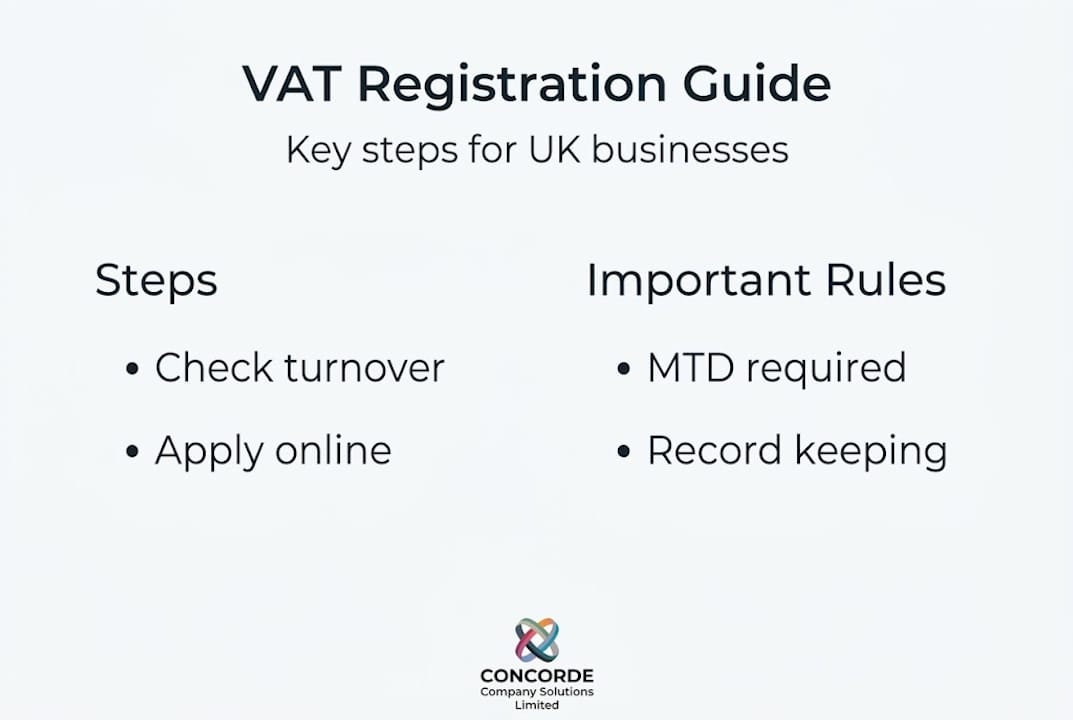
Beyond scheme choice, Making Tax Digital VAT has fundamentally changed how VAT returns are filed. MTD requires digital records and electronic VAT returns submitted via compatible software for all registered businesses. This is not optional. You need accounting software that links directly to HM Revenue and CUstoms, and your records must be kept digitally from the start.
The impact has been significant. MTD’s pilot programme showed a measurable reduction in VAT errors, which demonstrates that digital compliance is not just a regulatory burden but a genuine accuracy improvement. You can find more detail in our guide to digital VAT filing requirements.
If you are new to Cash accounting explained, it is worth reading up before deciding which scheme suits your payment cycles best.
A smarter approach to VAT: lessons and pitfalls for UK SMEs
Having covered the mechanics and choices, it is vital to step back and consider how to use VAT rules to your business’s advantage. Most articles stop at the compliance angle. We think that is only half the story.
Voluntary registration is chronically underused. Many small business owners see VAT registration as a burden they want to delay as long as possible. But if your business spends heavily on VAT-bearing purchases, such as equipment, software licences, or professional services, registering voluntarily can put real money back into your business. The reclaimed input VAT can outweigh the administrative effort, particularly in your early growth phase.
The SME tax tips that make the biggest difference are often the structural ones. The flat rate scheme is a good example. It looks brilliantly simple until you discover the limited cost trader rule. If you spend less than 2% of your turnover on goods (not services), you must use a rate of 16.5%. For many service-led businesses, this means the scheme actually costs more than standard VAT accounting. Always run the numbers before joining.
De-registration and partial exemption are two other levers that SMEs rarely consider. If your turnover drops significantly during a difficult period, you may be eligible to deregister and simplify your affairs temporarily. That is a legitimate strategic response, not a failure.
Support with VAT registration and compliance
If VAT registration or scheme choice feels daunting, professional support is available.
Navigating HM Revenue and CUstoms rules whilst running a business is a significant commitment of time and attention. One misstep on your registration date, scheme selection, or digital filing can trigger penalties that far outweigh any short-term saving.

At concordecompanysolutions.co.uk, we help small and medium-sized businesses across the UK manage their VAT registration from start to finish. That includes identifying the right effective date, selecting the most appropriate VAT scheme for your business model, and setting up Making Tax Digital-compatible software so your returns are filed accurately and on time. Our team provides personalised guidance tailored to your turnover, trading structure, and sector, so you are never left second-guessing your obligations. Get in touch to find out how we can take the complexity out of VAT compliance.
frequently asked questions
What is the VAT registration threshold in 2026?
The mandatory threshold is £90,000 in taxable turnover over a rolling 12-month period. You must register within 30 days of the end of the month in which you exceed this figure.
Can I voluntarily register for VAT below the threshold?
Yes. voluntary registration is allowed if you make taxable supplies, even below the threshold. This lets you reclaim input VAT on purchases and can strengthen your credibility with B2B clients.
How long does VAT registration take with HM Revenue and CUstoms?
Most applications are processed within two to six weeks. During that time, keep records of all taxable sales and be prepared to account for VAT from your effective registration date.
Do all VAT-registered businesses need to use Making Tax Digital?
Yes. MTD is mandatory for all VAT-registered businesses. You must keep digital records and submit VAT returns using HM Revenue and CUstoms-compatible software.
What are the benefits and risks of the flat rate scheme?
The flat rate scheme reduces admin by letting you pay a fixed percentage of turnover to HM Revenue and CUstoms. However, limited cost traders must use a 16.5% rate, which often makes it more expensive than standard VAT accounting. Always check your figures first.
No responses yet