
Many UK business owners confuse statutory accounting with everyday bookkeeping, but they serve entirely different purposes. Statutory accounting involves preparing legally compliant financial statements that meet Companies Act and HMRC requirements, ensuring transparency and accountability. This guide clarifies what statutory accounting truly means, outlines your legal obligations, and shows how proper compliance protects your business whilst building credibility with stakeholders and tax authorities.
Table of Contents
- Understanding Statutory Accounting And Its Purpose
- Statutory Accounting Versus Management Accounting: Key Differences
- How To Prepare Statutory Accounts And Meet UK Compliance Requirements In 2026
- Benefits Of Statutory Accounting Compliance For UK Small And Medium Businesses
- How We Can Support Your Statutory Accounting Needs
- Frequently Asked Questions About Statutory Accounting
Key takeaways
| Point | Details |
|---|---|
| Legal requirement | All UK limited companies must prepare statutory accounts annually to comply with Companies Act and HMRC regulations. |
| Filing deadlines | Submit accounts to Companies House within nine months of year end, with late filing triggering fines up to £1,500. |
| Distinct purpose | Statutory accounts differ from management accounts by focusing on legal compliance rather than internal decision making. |
| Business benefits | Proper compliance enhances credibility with lenders, supports tax optimisation, and provides legal protection for directors. |
Understanding statutory accounting and its purpose
Statutory accounting refers to the preparation of financial statements according to legal standards set by the Companies Act 2006 and HMRC regulations. These accounts provide a standardised view of your company’s financial position, ensuring transparency for shareholders, creditors, and tax authorities. Unlike informal bookkeeping or internal reports, statutory accounts must follow specific formats and accounting principles.
The legal framework requires every UK limited company to prepare statutory accounts annually, regardless of size or turnover. These documents form the foundation of corporate transparency, allowing stakeholders to assess financial health and make informed decisions. Statutory accounts must comply with UK Companies Act requirements and HMRC regulations, creating a level playing field for all market participants.
Who must prepare statutory accounts? Any business registered as a limited company falls under this obligation. Sole traders and partnerships have different requirements, but limited companies cannot avoid this responsibility. The accounts must include a balance sheet, profit and loss statement, notes to the accounts, and a director’s report for most companies.
Many business owners mistakenly believe statutory accounts are simply year end bookkeeping summaries. This misconception leads to rushed preparation and potential compliance issues. Statutory accounts serve a specific legal purpose beyond tracking income and expenses. They demonstrate accountability to Companies House, inform HMRC tax assessments, and provide statutory protection for directors who fulfil their fiduciary duties.
The purpose extends beyond mere compliance. Properly prepared statutory accounts help you secure financing, attract investors, and build supplier relationships. Lenders scrutinise these documents when assessing creditworthiness, whilst investors use them to evaluate business viability. Your limited company compliance guide should treat statutory accounting as a strategic asset, not just a regulatory burden.
Common misconceptions include thinking abbreviated accounts eliminate the need for full preparation or believing small companies can skip certain disclosures. Whilst micro entities and small companies may file simplified versions, you must still prepare full accounts internally. The filing exemptions relate to what you submit publicly, not what you create for your records.
Statutory accounting versus management accounting: key differences
Management accounts and statutory accounts serve fundamentally different purposes, though both involve financial reporting. Management accounts are internal tools focusing on operational decisions, distinct from statutory accounts which are legally required. Understanding these differences helps you leverage both effectively.
Statutory accounts target external stakeholders and must follow rigid formatting rules under UK GAAP or FRS 102. Management accounts serve internal audiences, allowing flexible formats tailored to your specific business needs. You might produce management accounts monthly or quarterly to track performance, whilst statutory accounts are prepared annually.

The reporting standards differ significantly. Statutory accounts must include specific disclosures about accounting policies, related party transactions, and director remuneration. Management accounts can focus entirely on metrics that matter to your business, such as departmental profitability, cash flow forecasts, or product line performance.
Here’s a practical comparison:
| Aspect | Statutory Accounts | Management Accounts |
| — | — |
| Legal status | Legally required | Optional |
| Audience | External stakeholders, HMRC | Internal management |
| Format | Standardised under UK GAAP | Flexible, customised |
| Frequency | Annual | Monthly or quarterly |
| Purpose | Compliance and transparency | Decision making and planning |
Content variations reflect these different purposes. Statutory accounts provide a historical snapshot of financial position at year end. Management accounts offer forward looking insights, including budgets, forecasts, and variance analysis. You use management accounts to steer your business, whilst statutory accounts demonstrate where you’ve been.
Legal necessity separates these two reporting types most clearly. Missing your statutory accounts deadline triggers automatic penalties and potential director disqualification. Skipping management accounts carries no legal consequence, though it may harm your ability to make informed decisions. Smart business owners recognise why use management accounts alongside meeting statutory obligations.
Businesses typically use statutory accounts when dealing with external parties: banks reviewing loan applications, investors conducting due diligence, or suppliers assessing credit terms. Management accounts guide internal strategy: pricing decisions, cost control initiatives, or expansion planning. Both play vital roles in financial management.
Pro Tip: Maintain consistent accounting policies between your management and statutory accounts to simplify year end preparation and ensure your internal reports accurately predict statutory outcomes.
How to prepare statutory accounts and meet UK compliance requirements in 2026
Preparing statutory accounts involves several critical steps that must be completed accurately and on time. Late filing can trigger fines of up to £1,500 for small companies, with penalties escalating for repeated offences. Here’s your roadmap to compliance:
- Gather complete financial records for your accounting period, including bank statements, invoices, receipts, and payroll documentation.
- Reconcile all accounts to ensure your bookkeeping accurately reflects business transactions throughout the year.
- Prepare a trial balance summarising all ledger accounts and verify debits equal credits.
- Make year end adjustments for accruals, prepayments, depreciation, and stock valuations.
- Draft your profit and loss statement showing revenue, costs, and net profit or loss.
- Create your balance sheet detailing assets, liabilities, and shareholders’ equity at year end.
- Compile notes to the accounts explaining accounting policies, significant transactions, and required disclosures.
- Prepare your director’s report if you’re not a micro entity, covering business review and principal activities.
- Obtain audit approval if your company exceeds small company thresholds or articles require it.
- File accounts with Companies House within nine months of your accounting reference date.
- Submit your Corporation Tax return to HMRC within 12 months of period end, including accounts and tax computation.
Key statutory deadlines for 2026 require careful calendar management. Companies House imposes a nine month filing window from your year end date. Miss this deadline by one day and you face a £150 penalty, escalating to £1,500 for delays exceeding six months. HMRC allows 12 months for Corporation Tax returns but expects payment nine months and one day after period end.
Ensuring accuracy requires systematic verification at each stage. Cross reference your statutory accounts against bank statements, VAT returns, and PAYE submissions. Discrepancies between these records and your accounts raise red flags for HMRC. Follow statutory accounts preparation steps UK compliance guidelines to maintain consistency.
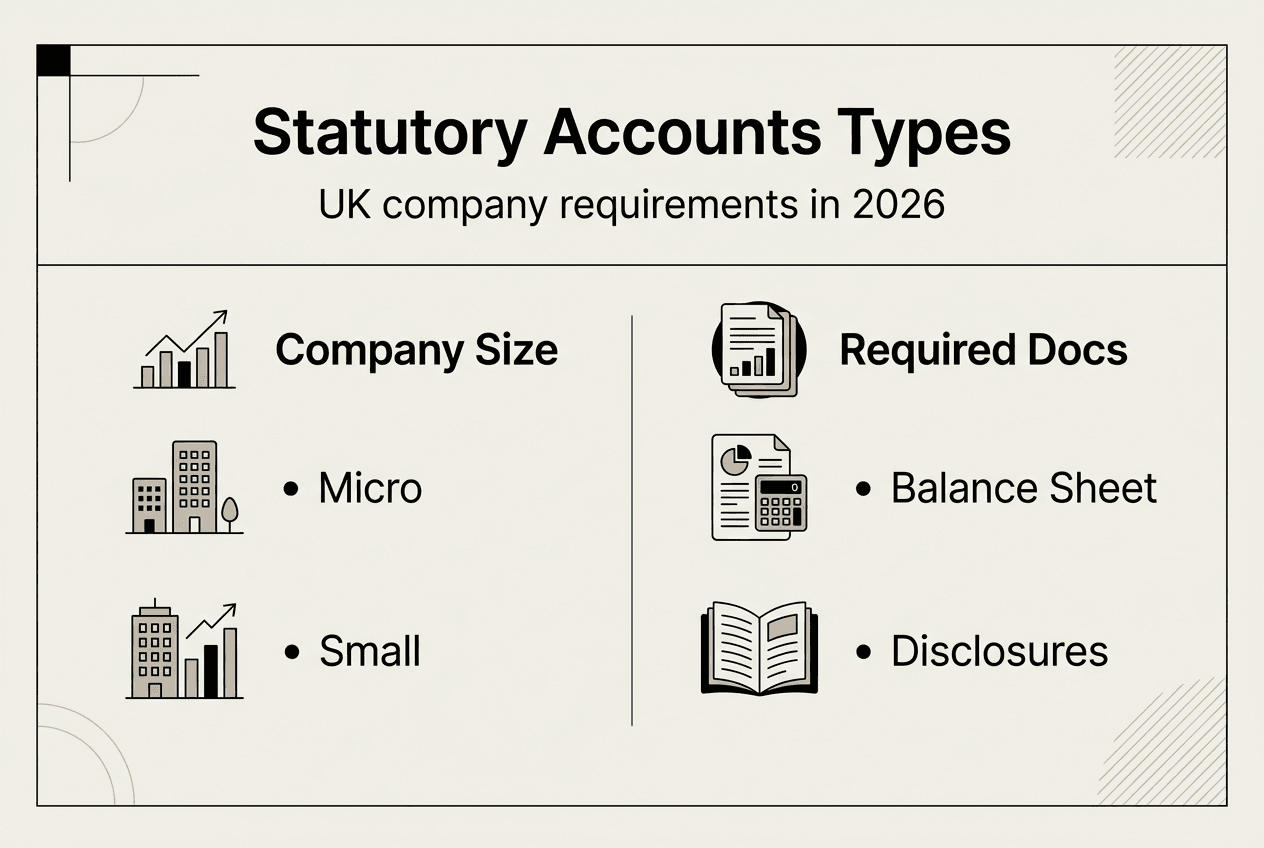
Required documents vary by company size. Micro entities can file simplified accounts with minimal disclosures. Small companies may claim audit exemption but must still prepare full accounts for shareholders. Medium and large companies face additional requirements including strategic reports and enhanced disclosures.
Pro Tip: Start your statutory accounts preparation at least three months before your deadline to allow time for queries, corrections, and professional review without last minute stress.
Common preparation pitfalls include misclassifying expenses, forgetting to accrue for year end costs, or omitting required disclosures about related parties. Directors sometimes sign accounts without reading them, creating personal liability risks. Treat your statutory accounts as legal documents requiring thorough review before submission.
Benefits of statutory accounting compliance for UK small and medium businesses
Maintaining statutory accounting compliance delivers tangible advantages beyond avoiding penalties. Compliant statutory accounts enhance trust with lenders and investors, helping business growth through improved access to capital and credit facilities.
Improved regulatory compliance provides legal protection for directors. When you meet your statutory obligations, you demonstrate responsible stewardship and reduce personal liability risks. Companies House strikes off non compliant companies, whilst HMRC can pursue directors personally for unpaid Corporation Tax linked to missing returns.
Better financial transparency benefits all stakeholders. Shareholders gain clear visibility into company performance. Suppliers can assess creditworthiness before extending payment terms. Employees see evidence of business stability when considering long term career commitments. This transparency builds confidence across your business ecosystem.
Obtaining financing becomes significantly easier with clean statutory accounts. Banks require at least three years of filed accounts before approving business loans. Invoice finance and asset based lending providers scrutinise your balance sheet to determine advance rates. Private equity investors won’t consider businesses with compliance gaps or qualified audit opinions.
Accurate tax reporting through statutory accounts helps identify legitimate tax savings whilst ensuring HMRC compliance. Your accounts form the basis for Corporation Tax computations, capital allowances claims, and R&D tax credit applications. Errors in statutory accounts can invalidate tax relief claims or trigger investigations.
Key compliance benefits include:
- Legal protection for directors fulfilling fiduciary duties
- Enhanced credibility with banks, investors, and suppliers
- Foundation for accurate tax planning and relief claims
- Evidence of business viability for contract tenders
- Simplified due diligence for acquisitions or investments
- Reduced risk of HMRC enquiries and penalties
Statutory accounts support strategic decision making by providing reliable historical data. You can identify trends, benchmark against industry standards, and set realistic growth targets. This historical perspective informs budgets, forecasts, and business plans with factual foundations.
Building business reputation requires consistent compliance. Companies with unbroken filing records signal professionalism and reliability. Late filings or repeated penalties raise concerns about management competence. Your limited company compliance checklist should prioritise statutory accounts as a cornerstone of corporate governance.
“Statutory compliance isn’t just about avoiding penalties. It’s about building a foundation of trust that opens doors to financing, partnerships, and growth opportunities that non compliant businesses simply cannot access.”
How we can support your statutory accounting needs
Navigating statutory accounting requirements whilst running your business creates genuine time pressures. Professional support reduces your risk of non compliance penalties and frees you to focus on growth activities. At Concorde Company Solutions, we specialise in preparing, reviewing, and filing statutory accounts for UK SMEs, ensuring you meet every deadline whilst optimising your financial reporting.
Our expertise covers the complete statutory accounting cycle, from bookkeeping reconciliation through to Companies House and HMRC submissions. We stay current with changing regulations, accounting standards, and filing requirements so you don’t have to. Tailored support means we adapt our services to your specific business structure, industry, and compliance needs.

Early engagement streamlines your accounting processes significantly. When we work with you throughout the year, year end becomes a smooth process rather than a stressful scramble. Pro Tip: Contact us at least four months before your accounting year end to ensure ample time for preparation, review, and timely filing without penalties.
Frequently asked questions about statutory accounting
What exactly is statutory accounting in simple terms?
Statutory accounting is the legal requirement for UK limited companies to prepare annual financial statements following Companies Act standards. These accounts provide a standardised view of your business finances for shareholders, creditors, and HMRC.
When must I file my statutory accounts and what are the penalties?
You must file statutory accounts with Companies House within nine months of your accounting year end. Late filing triggers automatic penalties starting at £150 for delays up to one month, escalating to £1,500 for delays exceeding six months.
Do all UK businesses need to prepare statutory accounts?
Only limited companies registered with Companies House must prepare statutory accounts. Sole traders and partnerships have different reporting requirements, though they still need accurate records for HMRC tax returns.
How do I ensure my statutory accounts are compliant?
Follow UK GAAP or FRS 102 accounting standards, include all required disclosures, reconcile accounts against source documents, and file within statutory deadlines. Using a statutory accounts checklist UK SMEs 2026 helps ensure nothing is missed.
Can I prepare statutory accounts myself or do I need an accountant?
You can legally prepare your own statutory accounts if you understand accounting standards and compliance requirements. However, professional accountants reduce error risks, ensure optimal tax treatment, and save significant time whilst providing audit trail protection.
What’s the difference between filing and preparing statutory accounts?
Preparing means creating the full accounts with all required statements and disclosures. Filing means submitting accounts to Companies House, which may be abbreviated versions for small companies, though you must still prepare full accounts for shareholders and records.
No responses yet