
TL;DR:
- Professional bookkeeping improves accuracy, reduces errors, and builds a trustworthy financial picture.
- Outsourcing bookkeeping saves time, aids compliance, and allows focus on business growth.
- Accurate records enhance credibility with lenders, investors, and HMRC, supporting future opportunities.
Running a small or medium-sized business in the UK means wearing many hats. But when it comes to managing your finances, trying to do everything yourself can quietly cost you far more than you realise. HMRC compliance alone is enough to keep any business owner up at night, and that’s before you factor in cash flow tracking, VAT returns, and payroll. Professional bookkeeping is not simply a luxury for larger firms. It is a practical, measurable investment that delivers real advantages, from fewer errors to stronger business credibility. This article covers the five most important benefits you should know about.
Table of Contents
- Accurate accounts and reduced errors
- Easier compliance with HMRC and legal obligations
- Time saved and focus on growing your business
- Clear insights for better business decisions
- Peace of mind and professional credibility
- What most business owners overlook about professional bookkeeping
- Take your business further with expert bookkeeping
- Frequently asked questions
Key Takeaways
| Point | Details |
|---|---|
| Fewer financial errors | Professional bookkeeping reduces costly mistakes and increases confidence in your accounts. |
| Simpler HMRC compliance | Trained bookkeepers help UK businesses stay compliant and avoid penalties related to tax and reporting. |
| More time to grow | Outsourcing lets you focus on expanding your business, not wrestling with paperwork. |
| Better decisions | Accurate and timely data from professional bookkeeping provides key insights for business strategy. |
Accurate accounts and reduced errors
Every financial decision your business makes rests on the quality of your records. If those records are inaccurate, every decision built on top of them is compromised. This is where professional bookkeeping earns its keep immediately.
Professional bookkeepers use double-entry bookkeeping systems alongside cloud software such as Xero, QuickBooks, and Sage, automated bank feeds, and regular audits to maintain data integrity throughout the year. This is not just about ticking boxes. It is about building a financial picture you can actually trust.
Automated bank feeds are particularly valuable. Rather than manually entering every transaction, which opens the door to typos and missed entries, feeds pull data directly from your bank account into your bookkeeping software. The result is a real-time, accurate ledger with far fewer opportunities for human error.
Here are some of the key ways professional bookkeeping reduces mistakes:
- Double-entry recording ensures every transaction is logged in two places, making errors easier to spot
- Regular reconciliations compare your records against bank statements to catch discrepancies early
- Cloud software creates automatic backups, so data is never lost due to hardware failure
- Audit trails allow every entry to be traced back to its source document
“Accurate books are not just about compliance. They are the foundation of every smart business decision you will ever make.”
Pro Tip: If you are currently managing your own accounts in a spreadsheet, you are likely spending hours each month on tasks that cloud software could handle in minutes. Reviewing bookkeeping best practices is a good starting point for understanding what a more structured approach looks like.
The importance of accuracy in your records cannot be overstated. Errors compound over time. A small miscategorisation in January can distort your entire year-end position, leading to incorrect tax submissions and potential penalties.
Easier compliance with HMRC and legal obligations
Accurate accounts form the backbone of compliance. Let’s see how professional bookkeeping makes meeting HMRC obligations much simpler.
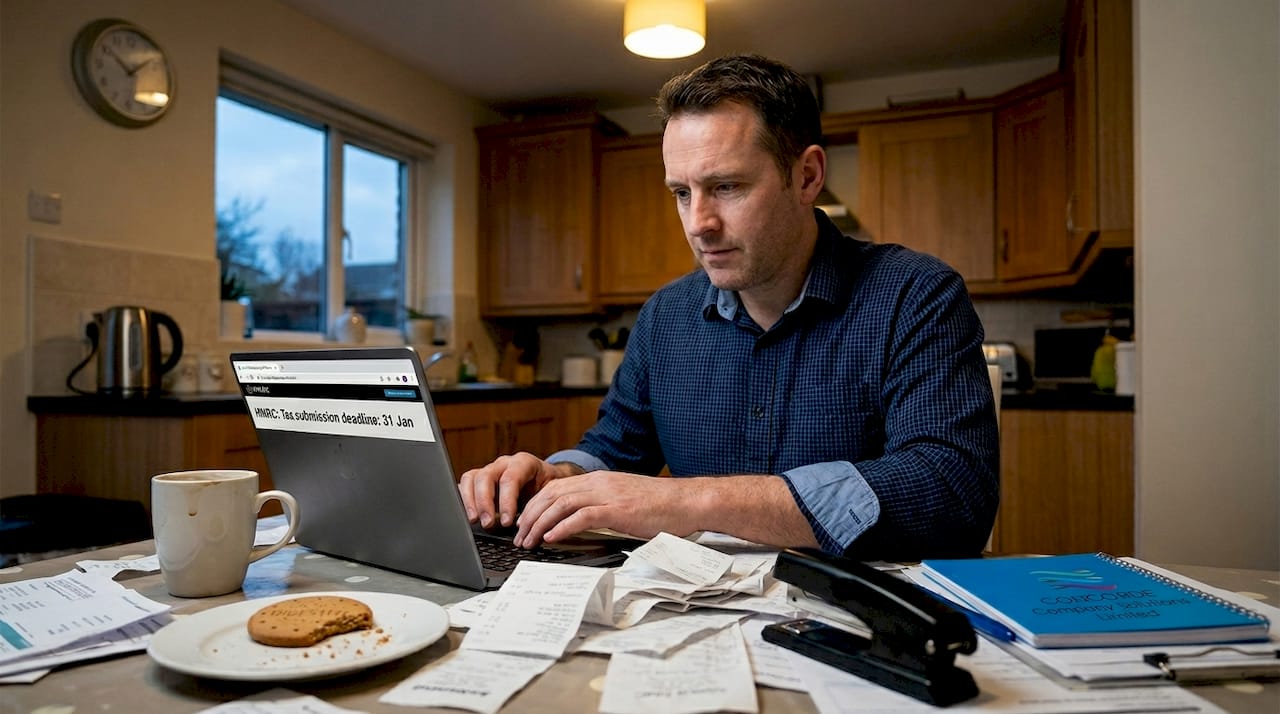
Compliance is not just about avoiding fines, though that matters enormously. It is also about your business’s reputation. Late filings, incorrect VAT returns, or missed payroll submissions can damage your standing with HMRC and make future dealings more complicated.
Professional bookkeepers categorise transactions per HMRC standards and reconcile records regularly, which supports accurate and timely tax submissions. This structured approach means nothing slips through the cracks.
Here is how professional bookkeeping supports compliance step by step:
- Transaction categorisation is handled according to HMRC-approved codes and classifications
- VAT returns are prepared accurately and submitted before quarterly deadlines
- Payroll records are maintained in line with Real Time Information (RTI) requirements
- Expense management ensures only allowable costs are claimed, reducing the risk of an HMRC enquiry
- Year-end preparation is smoother because records are kept current throughout the year
Did you know? HMRC issued over £1 billion in penalties in a recent year related to late or inaccurate tax returns. For small businesses, even modest fines can have a significant impact on cash flow.
Pro Tip: Making Tax Digital (MTD) now applies to VAT-registered businesses and is expanding to income tax. A professional bookkeeper will already be working within MTD-compatible software, keeping you ahead of the requirements without extra effort on your part.
Using professional bookkeeping for SMEs means you are not scrambling at year-end to piece together twelve months of transactions. The importance for SMEs of staying compliant cannot be separated from the day-to-day quality of your records.
Time saved and focus on growing your business
While compliance is crucial, saving time and focusing effort on what you do best can truly set your business apart.
Time is the one resource you cannot buy more of. Yet many business owners spend five to ten hours per month on bookkeeping tasks that a professional could handle in a fraction of the time. That is time you could spend winning new clients, improving your service, or simply running your business more effectively.
Outsourcing bookkeeping frees up management time for strategic decision-making and core business activity. This is not a minor benefit. It is a structural shift in how you operate.
Consider what you actually gain when bookkeeping is handled professionally:
- More time for customers means better service and stronger retention
- Energy for marketing and sales instead of chasing receipts
- Mental space for strategic thinking rather than worrying about whether figures balance
- Reduced stress during tax season because records are already in order
| Task | Time if DIY (monthly) | Time with professional support |
|---|---|---|
| Bank reconciliation | 3 to 5 hours | Handled for you |
| VAT return preparation | 2 to 4 hours | Handled for you |
| Expense categorisation | 2 to 3 hours | Handled for you |
| Payroll processing | 1 to 3 hours | Handled for you |
| Total | 8 to 15 hours | Near zero |
That is potentially two full working days returned to you every single month. For a business owner, that is transformative. Exploring outsourcing for small businesses in more detail shows just how practical this shift can be, particularly for firms based in Yorkshire and the wider North of England.
Clear insights for better business decisions
Reclaiming your time is just the start. Understanding your business’s finances in detail unlocks further rewards.
Good bookkeeping does not just record what has happened. It tells you where your business is heading. When your records are current and accurate, you gain access to reports that reveal your true financial position at any given moment.
Cloud bookkeeping tools provide reports and integrations that allow business owners to monitor financial health and trends on demand. This kind of visibility is genuinely powerful.
| Without professional bookkeeping | With professional bookkeeping |
|---|---|
| Cash flow surprises | Proactive cash flow forecasting |
| Guesswork on profitability | Clear profit and loss reports |
| Delayed year-end data | Real-time financial dashboards |
| Weak funding applications | Credible, audit-ready records |
Here is what better financial data actually enables:
- Cash flow forecasting so you can plan for quieter months in advance
- Profitability analysis by product, service, or customer segment
- Budget tracking to see whether spending aligns with your plan
- Funding readiness because lenders and investors require clean, up-to-date accounts
Understanding bookkeeping’s role in business success goes well beyond compliance. For business owners considering growth, restructuring, or even exploring the advantages of limited companies, having reliable financial data is essential for making the right call at the right time.
Peace of mind and professional credibility
Finally, knowing your finances are in expert hands has lasting reputational benefits.
There is a quiet confidence that comes from knowing your books are in order. You are not dreading an HMRC letter. You are not unsure whether your VAT return is correct. You are not piecing together records at midnight before a deadline. That peace of mind has real value.
Secure, reconciled records increase the confidence of investors, lenders, and HMRC, making business dealings smoother across the board. This credibility is hard to put a price on, but it shows up in practical ways.
Here is how professional bookkeeping builds credibility:
- Banks and lenders are more willing to offer credit when accounts are clean and current
- Investors can assess your business quickly with well-maintained records
- Business partners and suppliers gain confidence in your financial stability
- HMRC enquiries are far less stressful when every transaction is documented and reconciled
“A business with clean, professional accounts sends a clear signal: this is an organisation that takes itself seriously.”
Reviewing essential bookkeeping tips can help you understand the baseline standards that professional bookkeepers maintain as a matter of course. For many SME owners, seeing this list for the first time is a genuine eye-opener about what they may currently be missing.
What most business owners overlook about professional bookkeeping
Most conversations about bookkeeping focus on compliance and accuracy. Both matter enormously. But the deeper value of professional bookkeeping is something most business owners only discover after they have made the switch.
When your books are managed by a professional, your business becomes more adaptable. You can respond to opportunities faster because you know your financial position. You can approach a bank with confidence. You can plan an exit or a sale with credible, auditable records already in place.
The strategic benefits of professional bookkeeping are often invisible until you need them. A business that has neglected its books can find itself locked out of funding, unable to attract partners, or facing a painful and expensive clean-up exercise before any major transaction.
The most successful UK SMEs we work with do not treat bookkeeping as a chore. They treat it as a strategic asset. Accurate, current financial records are not just about staying compliant. They are about staying ready for whatever comes next, whether that is growth, investment, or change.
Take your business further with expert bookkeeping
If the benefits outlined above resonate with you, the next step is straightforward. Professional bookkeeping support can simplify your compliance, give you back your time, and provide the financial clarity your business needs to grow with confidence.

At Concorde Company Solutions, we work with small and medium-sized businesses across the UK to provide tailored bookkeeping support that fits your needs and budget. We also offer integrated payroll and bookkeeping services so you can manage all your compliance obligations in one place, with one trusted team. Get in touch today to find out how we can take the financial pressure off your plate.
Frequently asked questions
What is professional bookkeeping and how does it differ from DIY methods?
Professional bookkeeping involves trained experts using double-entry systems and cloud software to maintain accurate, compliant records, offering far greater reliability than spreadsheets or manual DIY methods.
How does professional bookkeeping help with HMRC compliance?
Professional bookkeepers categorise and reconcile records in line with HMRC standards, ensuring timely, accurate submissions and significantly reducing the risk of penalties or enquiries.
Can professional bookkeeping really save me time?
Yes. Outsourcing bookkeeping means trained professionals handle routine checks and reporting, freeing you to focus on customers, growth, and the work that actually moves your business forward.
Are professional bookkeeping services worth the investment for small UK businesses?
For most small businesses, the answer is yes. Secure, reconciled records and real-time cloud tools reduce errors, support compliance, and provide the financial insights that drive long-term growth.
No responses yet